Recomienda este artículo a tus amigos:
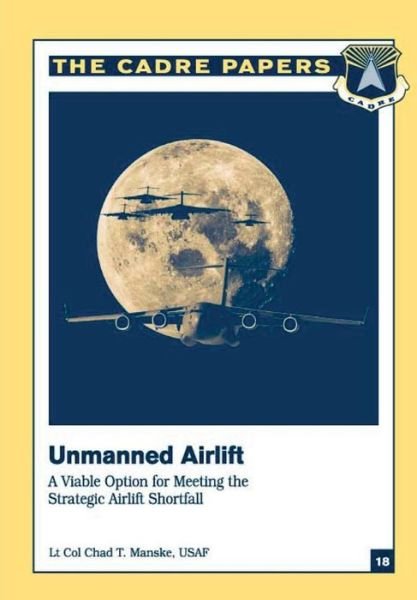
Unmanned Airlift: a Viable Option for Meeting the Strategic Airlift Shortfall: Cadre Paper No. 18 Manske, Lieutenant Colonel Usaf, Chad T
Pedido desde almacén remoto
Nuestros clientes opinan:


Unmanned Airlift: a Viable Option for Meeting the Strategic Airlift Shortfall: Cadre Paper No. 18
Manske, Lieutenant Colonel Usaf, Chad T
Publisher Marketing: This study on airlift, written before Operation Iraqi Freedom began, has greater relevance now that we have some clear lessons about the vital importance of airlift for operations in Iraq and Afghanistan. In Unmanned Airlift: A Viable Option for Meeting the Strategic Airlift Shortfall, Lt Col Chad T. Manske points to the growing dependency on strategic airlift as well as the abiding corollary that there will continue to be a shortfall in strategic airlift. Quite naturally, he asked whether there might be a suitable role for unmanned airlift in the Air Force. To get to the analysis, Colonel Manske raised three crucial questions: (1) are operational requirements able to justify unmanned airlifters, (2) are current and emerging technologies likely to meet these potential operational requirements, and (3) are the operational concepts cost-effective? Unsurprisingly, the author found a paucity of operational requirements. The first step in applying new technology is to convince unified combatant commanders and defense planners of a viable potential. Generally, operational and combat planners think primarily about capabilities available in the present. In addition, a long history of unproven aircraft concepts translates to high reluctance by the DOD and senior military leaders to commit funds to programs that show little near-term prospects of success. Clear assurances are needed to invest in procurement and acquisition of these new systems and attendant capabilities. The author suggests that the current shortfall of aircrew, the evident progress in emerging unmanned aircraft technology, and the currently increasing funding of unmanned aerial vehicle (UAV) research and development are all providing impetus to investigate the unmanned airlift concept. Colonel Manske thoughtfully provides an interesting scheme for employing these large vehicles using a monitoring mother ship to mitigate the very real problem of globally navigating in controlled airspace occupied by manned aircraft. He is also hopeful that air traffic management procedures will be upgraded to support autonomous UAV operations. Finally, the author has three suggestions for a DOD investigation: 1) Agents must perform a detailed cost-benefit analysis, learning best practices from Joint Unmanned Combat Air Systems and UAV programs; 2) Charge Defense Advanced Research Projects Agency with the responsibility of determining the feasibility of concepts for unmanned airlift; and 3) Use war games to determine and establish a feasible concept of operations and employment. Contributor Bio: Air University Press Walter Gary Sharp Sr. serves as a senior associate deputy general counsel for intelligence at the US Department of Defense, where he advises on legal issues related to intelligence, covert action, intelligence and counterintelligence policy, intelligence oversight, information security, information sharing, security classification policy, information operations, and computer network operations. Prior to his appointment, Dr. Sharp served as an associate deputy general counsel for international affairs at the Department of Defense; the director of legal research for international, comparative, and foreign law at the Law Library of Congress; the director of global and functional affairs within the Bureau of Legislative Affairs at the State Department; and a principal information security engineer at The MITRE Corporation. A veteran with 25 years of service, Dr. Sharp retired as a decorated US Marine Corps lieutenant colonel with prior enlisted service. His military assignments include commanding officer of a field artillery battery, senior prosecutor, deputy legal counsel to the chairman of the Joint Chiefs of Staff, and international law adviser for the commanding general of the Unified Task Force in Somalia during Operation Restore Hope. Dr. Sharp's military decorations include the Defense Superior Service Medal, and his many awards for writing excellence and academic achievement include the Judge Advocate General's School Alumni Association Annual Professional Writing Award and an American Bar Association Award for Professional Merit. Dr. Sharp is the author of numerous articles and three books: UN Peace Operations (1995), CyberSpace and the Use of Force (1999), and Jus Paciarii (1999). He serves as an adjunct professor of law at Georgetown University Law Center where he currently teaches a counterterrorism course, The Law of 24. He has also taught graduate-level seminars on United Nations peace operations and international peace and security. He lectures internationally in universities and other diverse public forums on wide-ranging topics of international law and national security law, such as international peace and security, conflict management, and peacekeeping operations.
| Medios de comunicación | Libros Paperback Book (Libro con tapa blanda y lomo encolado) |
| Publicado | 25 de agosto de 2012 |
| ISBN13 | 9781479196807 |
| Editores | Createspace |
| Páginas | 120 |
| Dimensiones | 170 × 244 × 6 mm · 204 g |