
Recomienda este artículo a tus amigos:
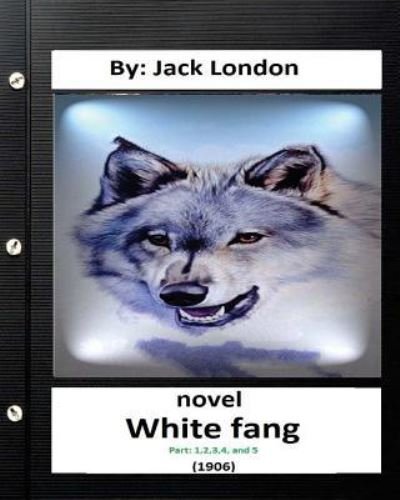
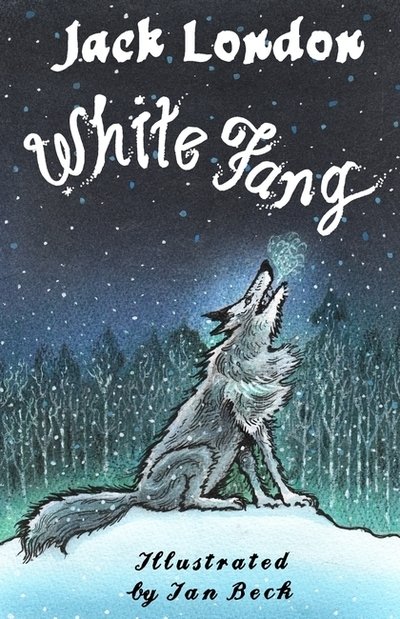
White Fang Jack London
Nuestros clientes opinan:


También disponible como:
- Paperback Book (2025) Mex$ 210
- Paperback Book (2001) Mex$ 227
- Paperback Book (2017) Mex$ 244
- Paperback Book (2018) Mex$ 244
- Paperback Book (2016) Mex$ 244
- Paperback Book (2013) Mex$ 253
- Paperback Book (2018) Mex$ 255
- Paperback Book (2018) Mex$ 259
- Paperback Book (2017) Mex$ 259
- Paperback Book (2017) Mex$ 259
- Paperback Book (2015) Mex$ 259
- Paperback Book (2014) Mex$ 259
- Paperback Book (2016) Mex$ 259
- Paperback Book (2013) Mex$ 268
- Paperback Book (2015) Mex$ 268
- Paperback Book (2014) Mex$ 274
-
Paperback BookEnglish edition(2016) Mex$ 278
- Paperback Book (2014) Mex$ 283
- Paperback Book (2017) Mex$ 283
- Paperback Book (2018) Mex$ 285
- Paperback Book (2018) Mex$ 289
- Paperback Book (2018) Mex$ 289
- Paperback Book (2016) Mex$ 291
- Paperback Book (2017) Mex$ 291
- Paperback Book (2013) Mex$ 291
White Fang
Jack London
Publisher Marketing: In 1904 Jack London wrote to his editor about his idea for his next book: "Not a sequel to 'Call of the Wild.' But a companion to it. I'm going to reverse the process. Instead of a devolution or decivilization of a dog, I'm going to give the evolution, the civilization of a dog--development of domesticity, faithfulness, love, morality, and all the amenities and virtues." That, in a nutshell, is the plot of "White Fang." And because London designed the books to be mirror images, the second book is almost inevitably compared to the first (especially because the earlier book is far more widely read). It's a worthy companion (or sequel) to "Call of the Wild," and it imagines in far more detail what life in the wild and in the human world must seem like to a dog. The opening perspective, too, is different; while "Call of the Wild" begins when Buck is a young dog, "White Fang" opens before the hero is born, describing a famine that afflicts his half-wolf mother and full-wolf father and continuing through his birth and puppy-hood. The action for "White Fang" picks up noticeably when the young wolf stumbles upon a tribe of nomadic Indians. From there, his life is beyond his control, changing hands from owner to owner, first as a sled dog and then as a fighting dog, until he is rescued by a humane master. More than twice as long as "Call of the Wild," "White Fang" describes many more adventures and characters. At the same time, what distinguishes "Call of the Wild" is its powerful, insightful brevity; here, London's imaginings are more expansive. Even as London philosophizes about human life allegorically, through the mind of the dog, his passages at times border on exaggerated anthropomorphism, such as when White Fang sees San Francisco for the first time: "Through it all, behind it all, was man, governing and controlling, expressing himself, as of old, by his mastery over matter. It was colossal, stunning. White Fang was awed. Fear sat upon him. . . . As never before, he felt his dependence on the love-master, close at whose heels he followed, no matter what happened never losing sight of him." An enjoyable read, including the sentimental ending, which will probably bring a tear to many an eye. Review Citations: School Library Journal 03/01/2014 pg. 74 (EAN 9781629230368, Compact Disc) Contributor Bio: London, Jack Jack London (1876-1916) was an American writer who produced two hundred short stories, more than four hundred nonfiction pieces, twenty novels, and three full-length plays in less than two decades. His best-known works include The Call of the Wild, The Sea Wolf, and White Fang.
| Medios de comunicación | Libros Paperback Book (Libro con tapa blanda y lomo encolado) |
| Publicado | 30 de enero de 2013 |
| ISBN13 | 9781482021233 |
| Editores | Createspace |
| Páginas | 162 |
| Dimensiones | 152 × 229 × 9 mm · 226 g |
Mas por Jack London
Mostrar todo


Más de esta serie


![Cover for Jack London · White Fang (Royal Collector's Edition) (Case Laminate Hardcover with Jacket) (Hardcover Book) [Royal Collector's edition] (2021)](https://imusic.b-cdn.net/images/item/original/059/9781774762059.jpg?jack-london-2021-white-fang-royal-collector-s-edition-case-laminate-hardcover-with-jacket-hardcover-book&class=scaled&v=1642786409)










Ver todo de Jack London ( Ej. Paperback Book , Hardcover Book , Book , CD y CD MP3 )