Recomienda este artículo a tus amigos:
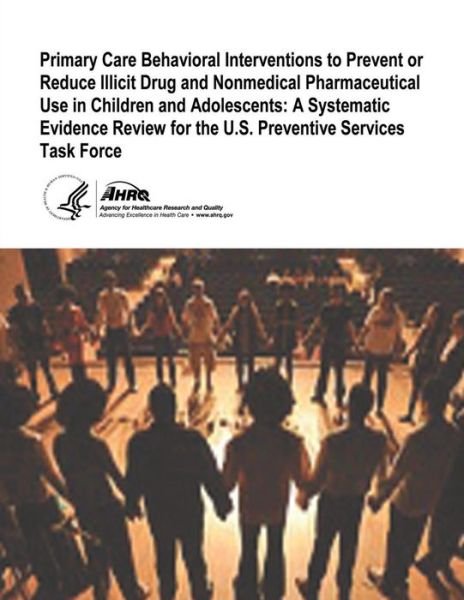
Primary Care Behavioral Interventions to Prevent or Reduce Illicit Drug and Nonmedical Pharmaceutical Use in Children and Adolescents: a Systematic Ev U S Department of Healt Human Services
Pedido desde almacén remoto
 Los regalos de Navidad se podrán canjear hasta el 31 de enero

Nuestros clientes opinan:


Primary Care Behavioral Interventions to Prevent or Reduce Illicit Drug and Nonmedical Pharmaceutical Use in Children and Adolescents: a Systematic Ev
U S Department of Healt Human Services
Marc Notes: Includes bibliographical references.; Drug use in youth is associated with multiple negative health and social consequences. Even infrequent use increases one's risk of serious adverse events due to an increase in risk-taking behaviors while intoxicated or impaired. Primary care could play a role in helping to prevent and reduce drug use in children and adolescents. PURPOSE: To systematically review the evidence on the benefits and harms of primary care-relevant interventions designed to reduce illicit drug use or the nonmedical use of prescription drugs in children and adolescents. METHODS: We searched PubMed, PsycINFO, and the Cochrane Collaboration Registry of Controlled Trials to identify relevant literature published between January 1992 and June 4, 2013 and MEDLINE through August 31, 2013. We also examined the references from other relevant reviews and included studies. Two investigators independently reviewed all titles/abstracts and full-text articles against a set of predetermined inclusion and quality criteria. One reviewer abstracted data into a standard evidence table and a second reviewer checked the data for completeness and accuracy. We qualitatively synthesized the results for the three Key Questions and grouped the included studies by intervention type (primary care-based vs. primary care-relevant computer-based interventions conducted outside of primary care). RESULTS: We included six studies reported in seven publications. Four of the six trials examined the effect of the intervention on a health outcome. One study found no effects of either a therapist-led or computer-based brief intervention on marijuana use consequences or driving under the influence of marijuana. Only one of the three computer-based interventions that reported depression outcomes found greater improvement in the intervention group compared with the control group at 6 months only. All six trials reported a drug use outcome. Four of the five studies assessing self-reported marijuana use found statistically significant differences in favor of the intervention group compared with the control group. All three computer-based trials also reported differences in nonmedical prescription drug use occasions. Individual studies reported additional substance use outcomes with mixed results. CONCLUSIONS: There is inadequate evidence on the benefits of primary care-relevant behavioral interventions in reducing self-reported illicit and pharmaceutical drug use in adolescents.; Prepared for: Agency for Healthcare Research and Quality, U. S. Department of Health and Human Services, 540 Gaither Road, Rockville, MD 20850; www.ahrq.gov Contract No. HHS-290-2007-10057-I. Prepared by: Kaiser Permanente Research Affiliates Evidence-based Practice Center, Center for Health Research, Portland, OR. Publisher Marketing: Drug use in youth is associated with multiple negative health and social consequences. Even infrequent use increases one's risk of serious adverse events due to an increase in risk-taking behaviors while intoxicated or impaired. Primary care could play a role in helping to prevent and reduce drug use in children and adolescents. In 2008, the U. S. Preventive Services Task Force (USPSTF) concluded that there was insufficient evidence to recommend for or against screening adolescents, adults, and pregnant women for illicit drug use. This recommendation was based on a staged evidence review of the literature published between 1994 and April 2006 and a 2008 supplemental assessment of screening instruments done on behalf of the USPSTF. The staged review only included research related to screening or treatment for marijuana, cocaine, or opioids and included evidence for children and adolescents, adults, and pregnant women. In contrast, the current systematic review focuses specifically on: 1) behavioral interventions that are considered feasible for primary care; 2) the primary prevention and reduction of all illicit drugs, including the nonmedical use of prescription drugs; and 3) children and adolescents age 18 years and younger only who do not meet criteria for substance abuse or dependence. The objective of this review is to systematically review evidence for the benefits and harms of primary care-relevant behavioral interventions designed to reduce illicit drug use or the nonmedical use of prescription drugs in children and adolescents.
| Medios de comunicación | Libros Paperback Book (Libro con tapa blanda y lomo encolado) |
| Publicado | 18 de abril de 2014 |
| ISBN13 | 9781499180923 |
| Editores | Createspace |
| Páginas | 70 |
| Dimensiones | 216 × 279 × 4 mm · 204 g |