Recomienda este artículo a tus amigos:
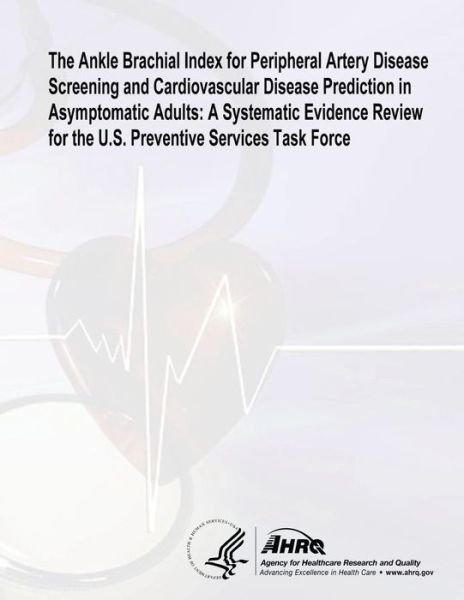
The Ankle Brachial Index for Peripheral Artery Disease Screening and Cardiovascular Disease Prediction in Asymptomatic Adults: a Systematic Evidence R U S Department of Healt Human Services
Pedido desde almacén remoto
 Los regalos de Navidad se podrán canjear hasta el 31 de enero

Nuestros clientes opinan:


The Ankle Brachial Index for Peripheral Artery Disease Screening and Cardiovascular Disease Prediction in Asymptomatic Adults: a Systematic Evidence R
U S Department of Healt Human Services
Publisher Marketing: The U. S. Preventive Services Task Force (USPSTF) will use this evidence review to update its previous recommendation on peripheral artery disease (PAD) screening. In 2005, the USPSTF recommended against routing screening for PAD based on fair-quality evidence indicating that routine screening for PAD in asymptomatic adults had little benefit. This systematic evidence review was conducted on the diagnostic and prognostic value of the resting ankle-brachial index (ABI) in unselected populations. This review also examined the benefit and harms of treating generally asymptomatic persons with peripheral artery disease (PAD). We conducted this review to support the U. S. Preventive Services Task Force in updating its recommendation on screening for PAD. PAD is an atherosclerotic occlusive condition in which plaque builds up in the distal arteries, constricting circulation and blood flow. PAD has also been referred to previously as peripheral vascular disease or peripheral artery occlusive disease. Lower-extremity PAD refers to atherosclerosis of arteries distal to the aortic bifurcation and most commonly occurs in the legs. The term PAD is also used more broadly to encompass a larger range of noncoronary arterial diseases or syndromes that are caused by the altered structure or function of arteries to the brain, visceral organs, and limbs. This review limits the definition of PAD, however, to atherosclerosis of the arteries distal to the aortic bifurcation, which is synonymous with lower-extremity PAD. Claudication is the most common symptom of lower-extremity PAD. Claudication is defined as discomfort, cramping, ache, or pain in one or both legs when walking that does not go away with continued walking and is relieved by rest. Most people with PAD, however, do not have any symptoms. Many people with PAD also have atypical manifestations of claudication or leg symptoms other than intermittent claudication, which further complicates diagnosis. Other signs and symptoms of PAD include foot pain at rest; numbness, tingling, cyanosis, hair loss, nonhealing ulcers, or gangrene of the lower extremity; functional impairment (e.g., poor standing balance, difficulty rising from a seated position); and erectile dysfunction. PAD diagnosis relies on both anatomy and function because atherosclerosis in the relevant vessels is what leads to impaired or constricted blood flow. Guidelines do not specify the degree of stenosis or impaired blood flow that is clinically relevant.
| Medios de comunicación | Libros Paperback Book (Libro con tapa blanda y lomo encolado) |
| Publicado | 18 de abril de 2014 |
| ISBN13 | 9781499181036 |
| Editores | Createspace |
| Páginas | 114 |
| Dimensiones | 216 × 279 × 6 mm · 281 g |