
Recomienda este artículo a tus amigos:
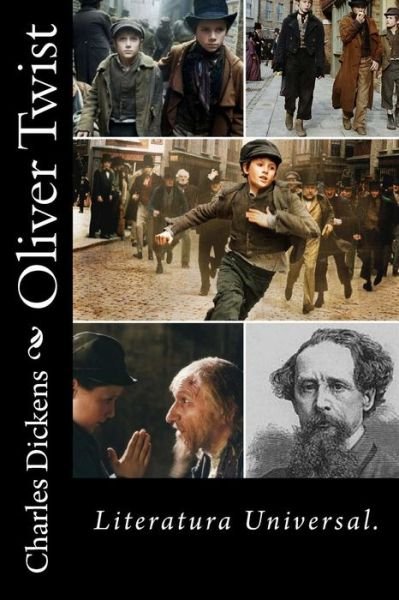
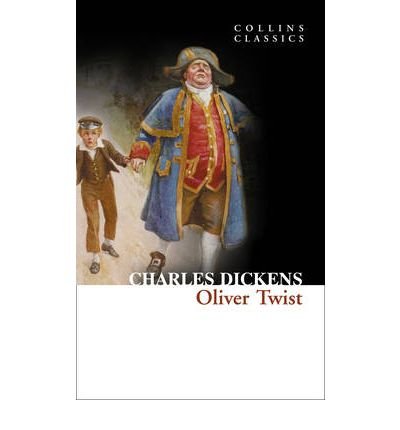
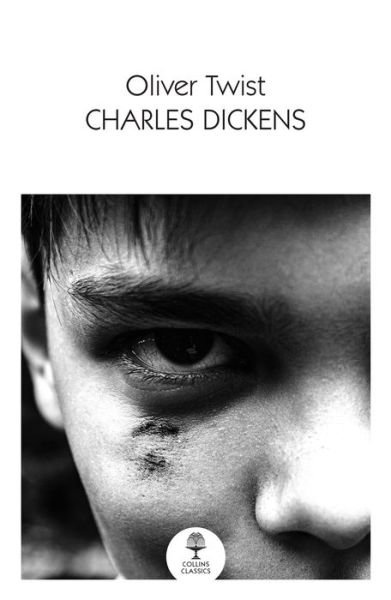
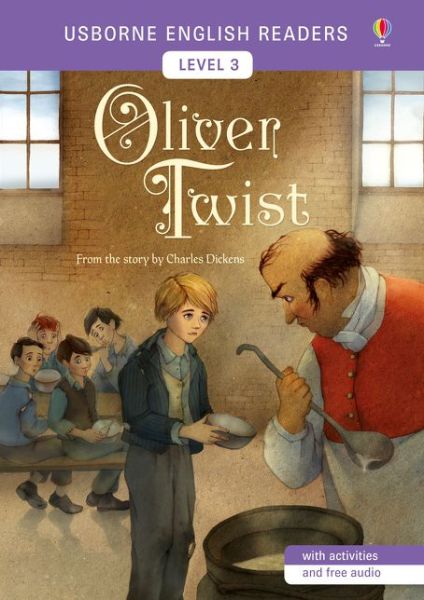
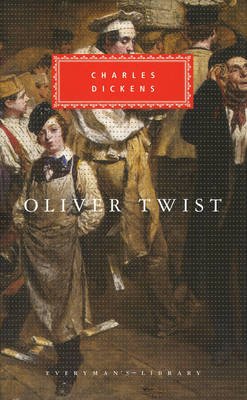
Oliver Twist Charles Dickens
Nuestros clientes opinan:


También disponible como:
- Paperback Book (2007) Mex$ 187
-
Paperback BookReissue edition(1982) Mex$ 189
- Paperback Book (2003) Mex$ 195
-
Paperback BookEnriched Classic edition(2007) Mex$ 202
-
Paperback Book1.º edición(2007) Mex$ 204
- Paperback Book (2013) Mex$ 204
- Paperback Book (2017) Mex$ 204
- Hardcover Book (2021) Mex$ 208
- Book (2025) Mex$ 215
- Paperback Book (2020) Mex$ 221
- Paperback Book (2025) Mex$ 221
- Paperback Book (2016) Mex$ 221
- Paperback Book (2017) Mex$ 249
- Paperback Book (2017) Mex$ 264
- Paperback Book (2018) Mex$ 268
- Paperback Book (2017) Mex$ 273
- Paperback Book (2015) Mex$ 277
- Paperback Book (2017) Mex$ 277
- Paperback Book (2017) Mex$ 279
- Paperback Book (2025) Mex$ 292
- Paperback Book (2019) Mex$ 301
-
Paperback BookSpanish edition(2015) Mex$ 301
- Paperback Book (2016) Mex$ 322
- Paperback Book (2010) Mex$ 322
- Paperback Book (2017) Mex$ 324
Oliver Twist
Charles Dickens
Publisher Marketing: Oliver Twist, subtitled The Parish Boy's Progress, is the second novel by English author Charles Dickens, published by Richard Bentley in 1838. The story is about an orphan, Oliver Twist, who endures a miserable existence in a workhouse and then is placed with an undertaker. He escapes and travels to London where he meets the Artful Dodger, leader of a gang of juvenile pickpockets. Naively unaware of their unlawful activities, Oliver is led to the lair of their elderly criminal trainer Fagin. Oliver Twist is notable for Dickens's unromantic portrayal of criminals and their sordid lives. The book exposed the cruel treatment of the many orphans in London during the Dickensian era. The book's subtitle, The Parish Boy's Progress, alludes to Bunyan's The Pilgrim's Progress and also to a pair of popular 18th-century caricature series by William Hogarth, A Rake's Progress and A Harlot's Progress. An early example of the social novel, the book calls the public's attention to various contemporary evils, including child labour, the recruitment of children as criminals, and the presence of street children. Dickens mocks the hypocrisies of his time by surrounding the novel's serious themes with sarcasm and dark humour. The novel may have been inspired by the story of Robert Blincoe, an orphan whose account of hardships as a child labourer in a cotton mill was widely read in the 1830s. It is likely that Dickens's own early youth as a child labourer contributed to the story's development. Oliver Twist has been the subject of numerous film and television adaptations, and is the basis for a highly successful musical play and the multiple Academy Award winning 1968 motion picture made from it. The novel was originally published in monthly instalments that began appearing in February 1837 and continued until April 1839. It was originally intended to form part of Dickens's serial, The Mudfog Papers. It did not appear again as a monthly serial until 1847. George Cruikshank provided one steel etching per month to illustrate each instalment. The first novelisation appeared six months before the initial serialisation was completed. It was published in three volumes by Richard Bentley, the owner of Bentley's Miscellany, under the author's pseudonym, "Boz," and included 24 steel-engraved plates by Cruikshank. Oliver Twist was born into a life of poverty and misfortune in a workhouse in an unnamed town (although when originally published in Bentley's Miscellany in 1837 the town was called Mudfog and said to be within 70 miles north of London - in reality this is the location of the town of Northampton). Orphaned almost from his first breath by his mother's death in childbirth and his father's unexplained absence, Oliver is meagerly provided for under the terms of the Poor Law, and spends the first nine years of his life at a baby farm in the 'care' of a woman named Mrs. Mann. Oliver is brought up with little food and few comforts. Around the time of Oliver's ninth birthday, Mr. Bumble, the parish beadle, removes Oliver from the baby farm and puts him to work picking and weaving oakum at the main workhouse. Oliver, who toils with very little food, remains in the workhouse for six months. One day, the desperately hungry boys decide to draw lots; the loser must ask for another portion of gruel. The task falls to Oliver, who at the next meal tremblingly comes up forward, bowl in hand, and begs Mr. Bumble for gruel with his famous request: "Please, sir, I want some more." Review Citations: Library Journal 12/01/1999 (EAN 9781859984826, Hardcover) Contributor Bio: Dickens, Charles Arguably one of the greatest writers of the Victorian era, Charles Dickens is the author of such literary masterpieces as A Tale of Two Cities (1859), A Christmas Carol (1843), David Copperfield (1850), and The Adventures of Oliver Twist (1839), among many others. Dickens's indelible characters and timeless stories continue to resonate with readers around the world more than 130 years after his death. Dickens was born in 1812 and died in 1870.
| Medios de comunicación | Libros Paperback Book (Libro con tapa blanda y lomo encolado) |
| Publicado | 21 de octubre de 2014 |
| ISBN13 | 9781502932280 |
| Editores | Createspace |
| Páginas | 236 |
| Dimensiones | 216 × 279 × 13 mm · 557 g |
Mas por Charles Dickens
Mostrar todo![Cover for Charles Dickens · Penguin Readers Level 3: A Christmas Carol (ELT Graded Reader): Abridged Edition - Penguin Readers (Paperback Book) [Abridged edition] (2027)](https://imusic-static.b-cdn.net/images/missing-tall.png)


Más de esta serie

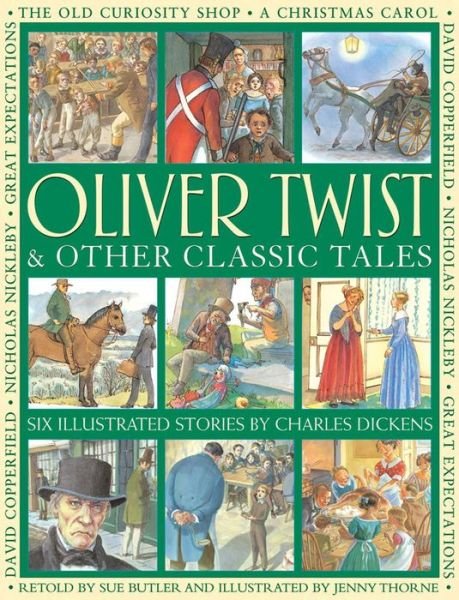
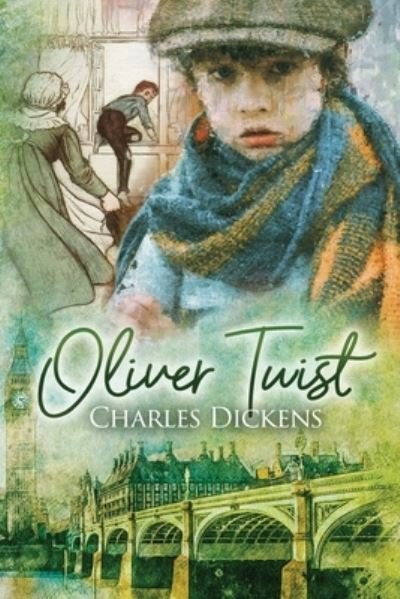
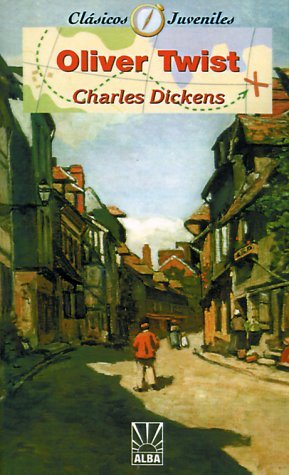
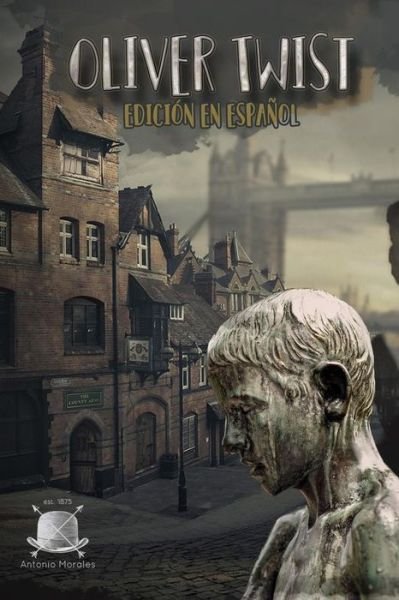
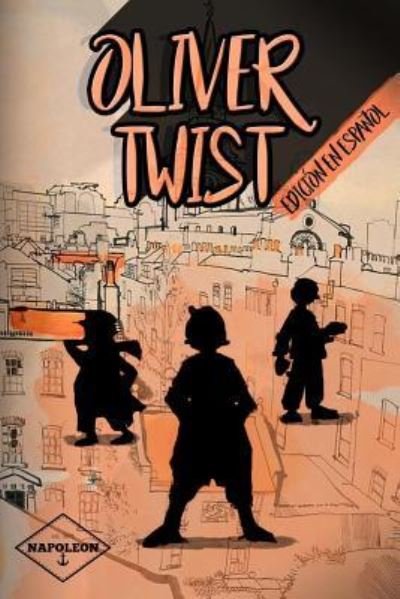
![Cover for Charles Dickens · Oliver Twist (Enriched Classics) (Paperback Book) [Enriched Classic edition] (2007)](https://imusic.b-cdn.net/images/item/original/754/9781416534754.jpg?charles-dickens-2007-oliver-twist-enriched-classics-paperback-book&class=scaled&v=1409614199)


![Cover for Charles Dickens · Oliver Twist (Large Print, Annotated) (Hardcover Book) [Large type / large print edition] (2021)](https://imusic.b-cdn.net/images/item/original/554/9781649220554.jpg?charles-dickens-2021-oliver-twist-large-print-annotated-hardcover-book&class=scaled&v=1634508361)
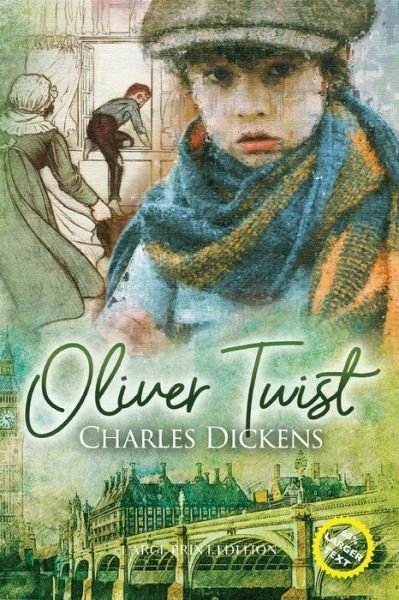
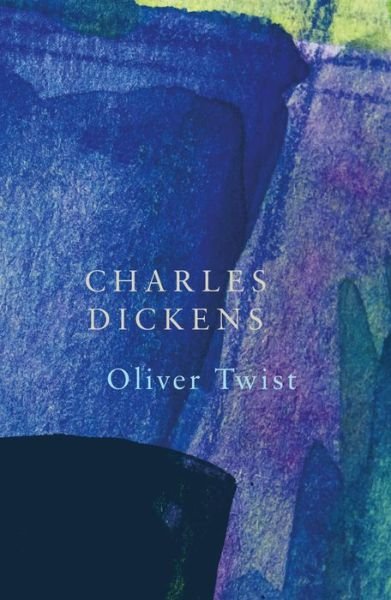
![Cover for Charles Dickens · Oliver Twist (Royal Collector's Edition) (Case Laminate Hardcover with Jacket) (Hardcover Book) [Royal Collector's edition] (2021)](https://imusic.b-cdn.net/images/item/original/097/9781774762097.jpg?charles-dickens-2021-oliver-twist-royal-collector-s-edition-case-laminate-hardcover-with-jacket-hardcover-book&class=scaled&v=1644169353)
![Cover for Charles Dickens · Oliver Twist (Tredition Classics) (French Edition) (Paperback Book) [French edition] (2012)](https://imusic.b-cdn.net/images/item/original/560/9783849135560.jpg?charles-dickens-2012-oliver-twist-tredition-classics-french-edition-paperback-book&class=scaled&v=1410797524)
![Cover for Charles Dickens · Oliver Twist (Tredition Classics) (German Edition) (Paperback Book) [German edition] (2012)](https://imusic.b-cdn.net/images/item/original/177/9783842468177.jpg?charles-dickens-2012-oliver-twist-tredition-classics-german-edition-paperback-book&class=scaled&v=1413021084)

![Cover for Charles Dickens · Oliver Twist - Children's Signature Classics (Hardcover Book) [Reissue edition] (2023)](https://imusic.b-cdn.net/images/item/original/261/9781454948261.jpg?charles-dickens-2023-oliver-twist-children-s-signature-classics-hardcover-book&class=scaled&v=1673903876)

![Cover for Charles Dickens · Oliver Twist - Flame Tree Collectable Classics (Hardcover Book) [New edition] (2020)](https://imusic.b-cdn.net/images/item/original/840/9781787557840.jpg?charles-dickens-2020-oliver-twist-flame-tree-collectable-classics-hardcover-book&class=scaled&v=1580325445)
![Cover for Charles Dickens · Oliver Twist - Foxton Reader Level-3 (900 Headwords B1) with free online AUDIO (Paperback Book) [New edition] (2019)](https://imusic.b-cdn.net/images/item/original/669/9781911481669.jpg?charles-dickens-2019-oliver-twist-foxton-reader-level-3-900-headwords-b1-with-free-online-audio-paperback-book&class=scaled&v=1568489013)
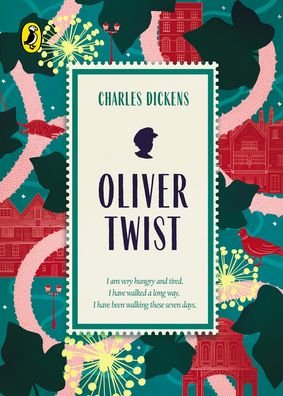
![Cover for Charles Dickens · Oliver Twist - Macmillan Collector's Library (Hardcover Book) [New edition] (2016)](https://imusic.b-cdn.net/images/item/original/370/9781509825370.jpg?charles-dickens-2016-oliver-twist-macmillan-collector-s-library-hardcover-book&class=scaled&v=1472670268)

Ver todo de Charles Dickens ( Ej. Paperback Book , Hardcover Book , Book , CD y Audiolibro (CD) )