Recomienda este artículo a tus amigos:
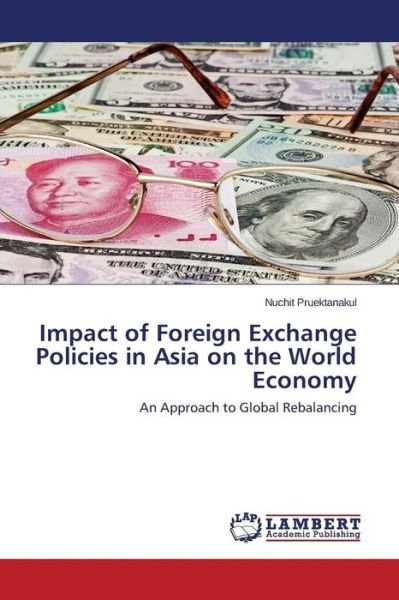
Impact of Foreign Exchange Policies in Asia on the World Economy: an Approach to Global Rebalancing Nuchit Pruektanakul
Pedido desde almacén remoto
Nuestros clientes opinan:


Impact of Foreign Exchange Policies in Asia on the World Economy: an Approach to Global Rebalancing
Nuchit Pruektanakul
Over the recent years, a prominent issue of global imbalances has centered upon increasingly large current account surpluses in emerging and developing Asia, corresponding to a huge deficit in the US. The US government and economists have accused China of keeping its currency undervalued as part of its export-led growth policy. Some also criticizes that other Asian countries tend to intervene in currency markets in order to keep their currencies weak against the dollar to stay competitive with Chinese goods. Thus, this book aims to investigate whether the Asian region, in particular China, can help global current account rebalancing through their exchange rate appreciation by using a global macroeconomic model, namely CAM, originated by Cripps and Godley (1978). From simulation results, real appreciation of Chinese yuan improves not only the US trade deficit, but also enhances trade balances for Japan and other Asian countries. Moreover, a reduction in China?s trade surplus due to the yuan appreciation would be amplified if there was an expansionary fiscal policy in China. In addition, joint appreciation among Asian countries is totally superior to their unilateral appreciation.
| Medios de comunicación | Libros Paperback Book (Libro con tapa blanda y lomo encolado) |
| Publicado | 31 de octubre de 2014 |
| ISBN13 | 9783659623240 |
| Editores | LAP LAMBERT Academic Publishing |
| Páginas | 128 |
| Dimensiones | 7 × 150 × 220 mm · 209 g |
| Lengua | Alemán |