
Recomienda este artículo a tus amigos:
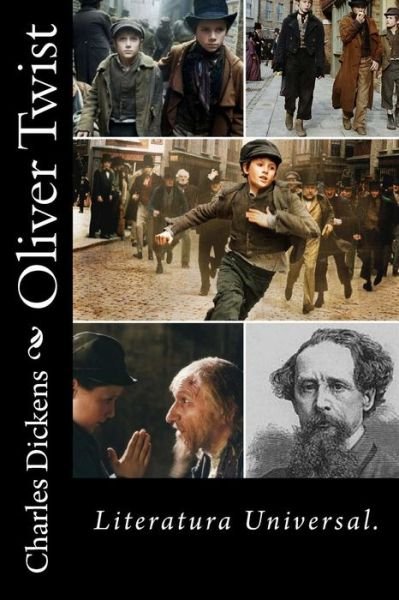
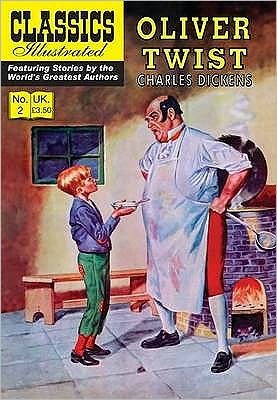
Oliver Twist Charles Dickens
Nuestros clientes opinan:


También disponible como:
- Book Mex$ 171
- Paperback Book (2007) Mex$ 186
-
Paperback BookReissue edition(1982) Mex$ 188
- Paperback Book (2003) Mex$ 197
-
Paperback BookEnriched Classic edition(2007) Mex$ 201
-
Paperback Book1.º edición(2007) Mex$ 203
- Paperback Book (2013) Mex$ 203
- Paperback Book (2017) Mex$ 208
- Hardcover Book (2021) Mex$ 208
- Book (2025) Mex$ 216
- Paperback Book (2020) Mex$ 218
- Paperback Book (2025) Mex$ 218
- Paperback Book (2016) Mex$ 218
- Paperback Book (2017) Mex$ 249
- Paperback Book (2017) Mex$ 264
- Paperback Book (2018) Mex$ 268
- Paperback Book (2017) Mex$ 270
- Paperback Book (2015) Mex$ 275
- Paperback Book (2017) Mex$ 275
- Paperback Book (2017) Mex$ 277
- Paperback Book (2025) Mex$ 298
-
Paperback BookSpanish edition(2015) Mex$ 301
- Paperback Book (2019) Mex$ 303
- Paperback Book (2016) Mex$ 320
- Paperback Book (2010) Mex$ 320
Oliver Twist
Charles Dickens
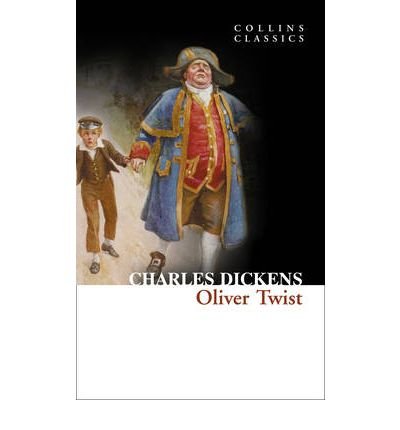
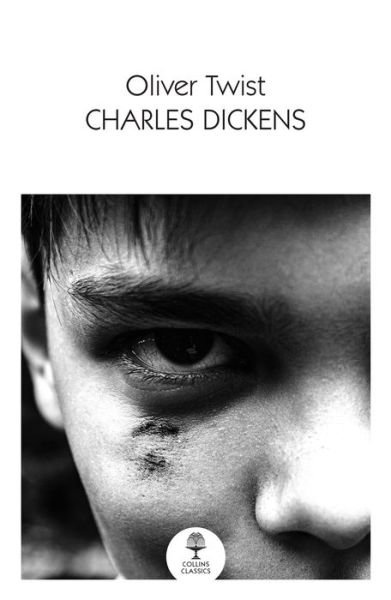
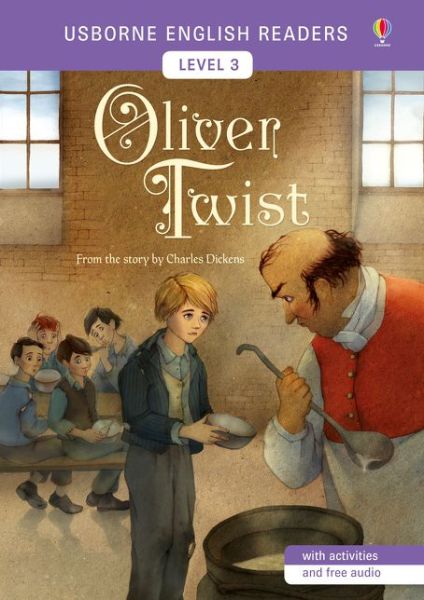
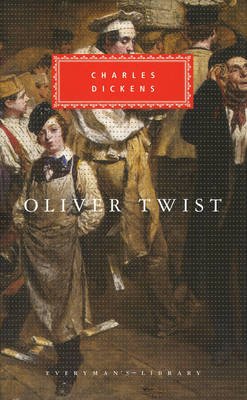
Oliver Twist, subtitled The Parish Boy's Progress, is the second novel by English author Charles Dickens, published by Richard Bentley in 1838. The story is about an orphan, Oliver Twist, who endures a miserable existence in a workhouse and then is placed with an undertaker. He escapes and travels to London where he meets the Artful Dodger, leader of a gang of juvenile pickpockets. Naïvely unaware of their unlawful activities, Oliver is led to the lair of their elderly criminal trainer Fagin. Oliver Twist is notable for Dickens's unromantic portrayal of criminals and their sordid lives. The book exposed the cruel treatment of the many orphans in London during the Dickensian era. The book's subtitle, The Parish Boy's Progress, alludes to Bunyan's The Pilgrim's Progress and also to a pair of popular 18th-century caricature series by William Hogarth, A Rake's Progress and A Harlot's Progress. An early example of the social novel, the book calls the public's attention to various contemporary evils, including child labour, the recruitment of children as criminals, and the presence of street children. Dickens mocks the hypocrisies of his time by surrounding the novel's serious themes with sarcasm and dark humour. The novel may have been inspired by the story of Robert Blincoe, an orphan whose account of hardships as a child labourer in a cotton mill was widely read in the 1830s. It is likely that Dickens's own early youth as a child labourer contributed to the story's development.
| Medios de comunicación | Libros Paperback Book (Libro con tapa blanda y lomo encolado) |
| Publicado | 27 de junio de 2020 |
| ISBN13 | 9798657384369 |
| Páginas | 272 |
| Dimensiones | 216 × 280 × 14 mm · 635 g |
| Lengua | Inglés |
Mas por Charles Dickens
Mostrar todo





Más de esta serie

![Cover for Charles Dickens · Oliver Twist (Enriched Classics) (Paperback Book) [Enriched Classic edition] (2007)](https://imusic.b-cdn.net/images/item/original/754/9781416534754.jpg?charles-dickens-2007-oliver-twist-enriched-classics-paperback-book&class=scaled&v=1409614199)


![Cover for Charles Dickens · Oliver Twist (Large Print, Annotated) (Hardcover Book) [Large type / large print edition] (2021)](https://imusic.b-cdn.net/images/item/original/554/9781649220554.jpg?charles-dickens-2021-oliver-twist-large-print-annotated-hardcover-book&class=scaled&v=1634508361)

![Cover for Charles Dickens · Oliver Twist (Royal Collector's Edition) (Case Laminate Hardcover with Jacket) (Hardcover Book) [Royal Collector's edition] (2021)](https://imusic.b-cdn.net/images/item/original/097/9781774762097.jpg?charles-dickens-2021-oliver-twist-royal-collector-s-edition-case-laminate-hardcover-with-jacket-hardcover-book&class=scaled&v=1644169353)
![Cover for Charles Dickens · Oliver Twist (Tredition Classics) (French Edition) (Paperback Book) [French edition] (2012)](https://imusic.b-cdn.net/images/item/original/560/9783849135560.jpg?charles-dickens-2012-oliver-twist-tredition-classics-french-edition-paperback-book&class=scaled&v=1410797524)
![Cover for Charles Dickens · Oliver Twist (Tredition Classics) (German Edition) (Paperback Book) [German edition] (2012)](https://imusic.b-cdn.net/images/item/original/177/9783842468177.jpg?charles-dickens-2012-oliver-twist-tredition-classics-german-edition-paperback-book&class=scaled&v=1413021084)

![Cover for Charles Dickens · Oliver Twist - Children's Signature Classics (Hardcover Book) [Reissue edition] (2023)](https://imusic.b-cdn.net/images/item/original/261/9781454948261.jpg?charles-dickens-2023-oliver-twist-children-s-signature-classics-hardcover-book&class=scaled&v=1673903876)

![Cover for Charles Dickens · Oliver Twist - Flame Tree Collectable Classics (Hardcover Book) [New edition] (2020)](https://imusic.b-cdn.net/images/item/original/840/9781787557840.jpg?charles-dickens-2020-oliver-twist-flame-tree-collectable-classics-hardcover-book&class=scaled&v=1580325445)
![Cover for Charles Dickens · Oliver Twist - Foxton Reader Level-3 (900 Headwords B1) with free online AUDIO (Paperback Book) [New edition] (2019)](https://imusic.b-cdn.net/images/item/original/669/9781911481669.jpg?charles-dickens-2019-oliver-twist-foxton-reader-level-3-900-headwords-b1-with-free-online-audio-paperback-book&class=scaled&v=1568489013)
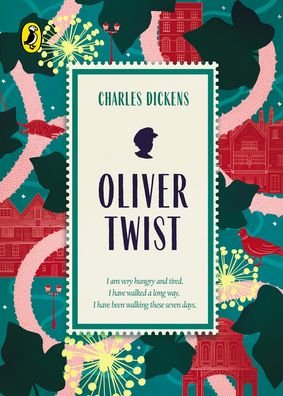
![Cover for Charles Dickens · Oliver Twist - Macmillan Collector's Library (Hardcover Book) [New edition] (2016)](https://imusic.b-cdn.net/images/item/original/370/9781509825370.jpg?charles-dickens-2016-oliver-twist-macmillan-collector-s-library-hardcover-book&class=scaled&v=1472670268)
Ver todo de Charles Dickens ( Ej. Paperback Book , Hardcover Book , Book , CD y Audiolibro (CD) )